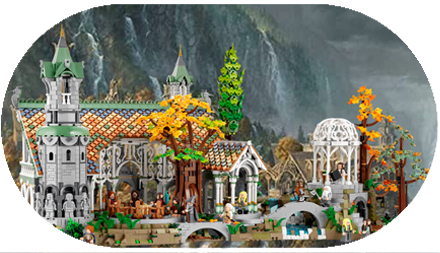
Rivendell LEGO Set Revealed

For anyone interested in LEGO and collectables, I currently work at iDisplayit to promote their display cases. The below blog may interest anyone looking at the new Lord of the Rings set!

In January’s Lord of the Rings Brickheadz blog, we discussed the rumours circulating that LEGO were working on a 6,000-strong LEGO brick set of Rivendell, the ancient hidden valley and last homely house west of the sea established by Elrond half-elven in the Second Age.

Now the rumours have been proven true, following a fun teaser post and subsequent official announcement.

Make no mistake – this is massive news for LOTR LEGO collectors. One does not simply see a new Lord of the Rings release and remain calm… not only is this the first new release for the theme (excluding the recent BrickHeadz) since 2014, but it is also the biggest Lord of the Rings LEGO set ever conceived. Praise the Valar!

As a location, Rivendell deserves nothing less than a large-scale LEGO imagining. Elrond’s seat of power was one of the most important elvish refuges against Sauron during the War of the Ring, housing countless artefacts, including the shards of Narsil (the sword that cut the One Ring from Sauron’s finger at the Battle of the Last Alliance).

It was also the location of the Council of Elrond, where the quest to destroy the Ruling Ring was conceived, and the Fellowship of the Ring was founded. Bilbo and his band of thirteen dwarves also passed through the mystical location on the quest to reclaim Erebor from the dragon Smaug during the events of The Hobbit. Unknown to them until later, Gandalf also met with the White Council there to lay plans to besiege the stronghold of the Necromancer to the south of Mirkwood.

This mighty set will be priced at £429.99 and will be available from 8th March 2023.

In the meantime, with plenty of images provided on the LEGO website, we asked our resident Tolkienite to cast an eagle eye over the new set to see what hidden details they could spot…
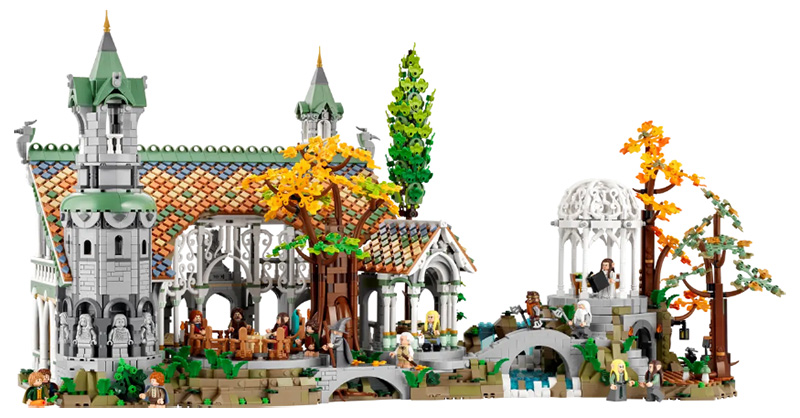
“I can’t remember the last time I’ve been this excited about a LEGO release! The front view of this set is stunning, perfectly capturing the vivid autumnal colours of Rivendell’s buildings and surrounding features. Special mention goes to the choice of bricks on the roof and the tree foliage. To the right, we can see the domed pergola where Arwen appeared to Aragorn in a dream in the film adaptation of The Two Towers, right next to the bridge where she gifted him the Evenstar pendant. We can also see one of the many elvish lanterns Tolkien describes, hanging over the elven forge where the shards of Narsil were reformed into Anduril, Flame of the West.”
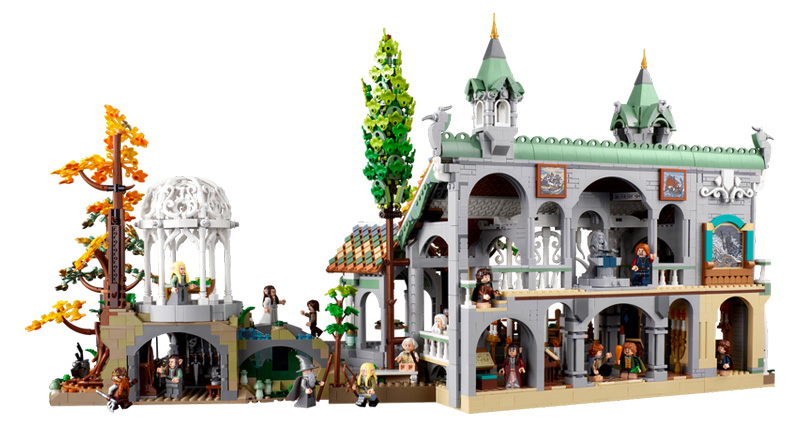
“I’m really impressed with how LEGO have laid this Middle Earth set out to include so many sections of what is, in reality, a large location, with spread out areas. Inside the building, we see the iconic foyer where the shards of Narsil are guarded over by the enigmatic elvish statue. I’m pleased to see the portrait of Sauron included on the wall, along with several tapestries, appearing to reference the journey across the sea to Valinor and the high city of Gondolin. The building also hides the study where Bilbo gifted Frodo the mithril vest and the bedroom where the young hobbit awoke after foiling the Nazgul at the Fords of Bruinen.”

“Elrond’s house leads onto the circular platform where the fabled council took place, complete with the central plinth on which rests The One Ring. The general detail here is astounding, especially the relief sculptures cast into the tower beside them.

The set includes not only the entire fellowship but also additional elves, including Lord Elrond. The other two remain unnamed, though there is a chance they could be Elladan, Elrohir, or perhaps Glorfindel. The inclusion of an elderly Bilbo Baggins and Gloin, Gimli’s father, also makes this set one for minifigure collectors to covet.”

Return to the MYSTsterious island – part one

Myst

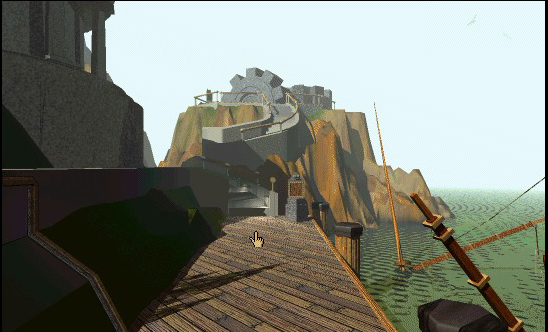
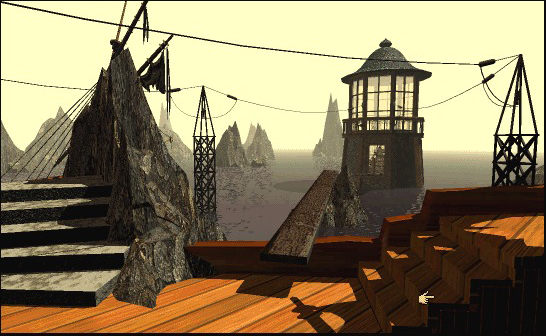
This weekend sees the release of MYST, a from-the-ground-up remake of the original, iconic game released for early PC and Mac on September 24, 1993. As a die-hard fan of not only Myst – but the arguably superior Riven, along with its many sequels and thrilling tie-in novelizations – I am only too happy to have an excuse to talk about this extraordinary game on this week’s blog. After all, this is the phenomenon that quite literally started it all for me. In this two-parter, I will be revisiting and discussing the original game, followed by my review of the recent release next time around.

1993. A time before Windows 95, the modern-day iMac, and the later operating systems we all know. A time when the PlayStation had just only just been announced; a time before Tomb Raider, FIFA, Warcraft, online gaming, and 3D graphics to dazzle the eye. This was the golden era of 16-bit consoles, with titles such as Super Mario, Street Fighter and Mortal Kombat providing an action-oriented thrill.

Not as clumsy or random as an action title. Elegant games, for a more… civilized age.

Then along came Myst. For myself, I did not stumble on the game until around 1995/96, when my dad finally relented to buy our first ever home computer. I had hoped for a Windows, dreaming of playing space-flight games such as Fury III, with a classic Sidewinder joystick. What we got was a grey box called a ‘Macintosh’, which whirred and groaned into slow action on a daily basis, like an old man trying to climb out of bed. Little did I realise how fortunate this turn of events had been – the Macintosh had been purchased second-hand, complete with a wallet full of CD-ROMs. Most of these were dull pieces of software… but there were also some games. Among these were strangely charming titles such as ‘Inbred with Rednex,’ where you escape from a canyon town by completing puzzles for members of the pseudo-cowboy band Rednex (yes, really), along with similar point-and-click learning adventures, such as Dorling Kindersley’s ‘Leonardo the Inventor’, ‘Ancient Lands’ and ‘Castle Explorer’.

Nestled somewhere in the middle of the wallet, was a visually striking blue CD titled: ‘Myst – the surrealistic adventure that will become your world’, with an illustration of a man falling through the sky towards an island. When I booted up the game, I had the unique experience of knowing nothing about the game or its story, having not even received the original box or jewel case. This was also a time before we even had dial-up internet in our home, while smartphones were a dream of the future. Upon my first arrival on Myst island, I was alone, with no method of solving the mysteries that lay ahead except for the limited intelligence of my six-year-old mind. I also had to rely on an old-school pencil and notepad, as I regularly jotted down notes and theories, my imagination running wild.

I will never forget the first time I heard the haunting music in the introductory video, followed by the narration of the man falling through the sky, leaving me even more confused as to what was going on. Then, in the darkness, a book appears. The pages are blank, save for a single panel, showing a visual fly-by of the island while the evocative main theme plays in a sombre, synth-like symphony.

The rest, as they say, is history. Myst masterfully places you alone on the shores of a dock, with no further instructions. You are tasked with exploring the empty buildings and interacting with hidden devices, complex contraptions, crumbling documents, and half-burned books to reveal your next steps. Throughout the game, the increasing sense of loneliness and unease pervades, as you explore silent, ruined worlds. It may seem ridiculous, but at the age of six, I often expected someone to run out from behind a tree or leap from a shadowy corridor to attack me. The spooky ambience of the ages of Myst is one of the strongest early memories of gaming that I have.

My room if I won the lottery…

A first-time player in the modern age will find little which they have not experienced before from walking simulator/indie/puzzle games. Myst, however, is the Citizen Kane of this genre; a classic title which introduced many familiar styles and tropes before everything that came after it. Viewed through the lens of today, the original version of the game appears dated (hence the number of re-releases over the years). It was essentially built as a slideshow of high-quality images, cleverly compressed to a much lower quality while retaining their color and visual appeal. Added to this were moving elements utilizing QuickTime video, such as birds in the sky, along with one of the game’s most intelligent inclusions – characters portrayed by real actors, seamlessly imposed over the digital environments.

Throughout production, the Rand brothers (co-founders of Cyan and creators of Myst) faced many challenges, such as slow CD ROM drives and computer memory, along with other technical limitations of the time. Despite this, they managed to produce a final product which pushed forward the potential of gaming, as well as popularizing the fledgling CD ROM drive system. I would strongly recommend that you take the time to watch ‘The Making of Myst’, a short video included on the original game CD, in which the brothers talk about the production in detail. It is fascinating to see how ground-breaking this all was at the time.

The enduring legacy of Myst cannot be denied. Nevertheless, it is impossible to provide an honest review score from a modern-day perspective, especially for a game that often struggles to run on modern gaming platforms. For anyone interested in experiencing the original game, I would suggest nothing better than watching Dilandau3000’s excellent ‘Let’s Play’ video on YouTube. His narration is perfect, taking time to explain the logic behind solving each puzzle, punctuated with interesting facts and thoroughly researched backstory throughout.

Anyone who knows me is aware that this is probably my favorite game of all time. Therefore, I hope you will forgive me the indulgence, as I travel back in time and ask my six-year-old self to provide a final score, through the nostalgic lens of the early 90’s…

10/10

Final Score

“Let my armies be the rocks and the trees… and the birds in the sky.”

Vane

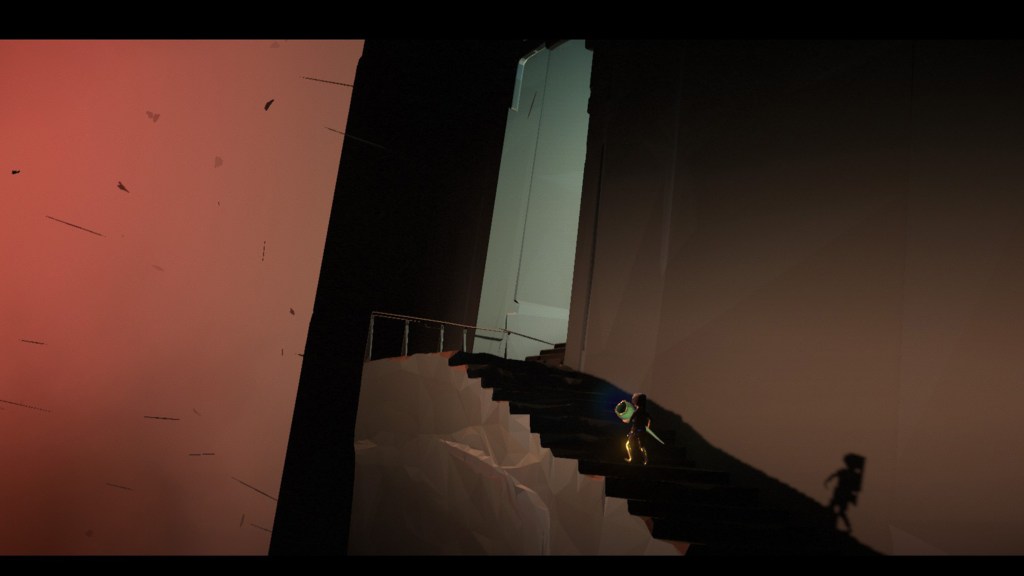
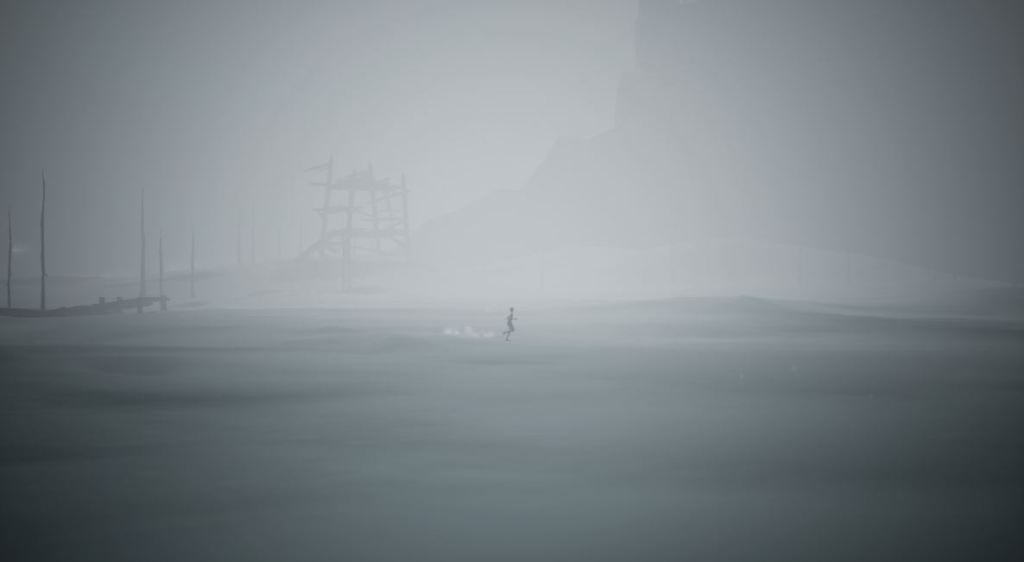
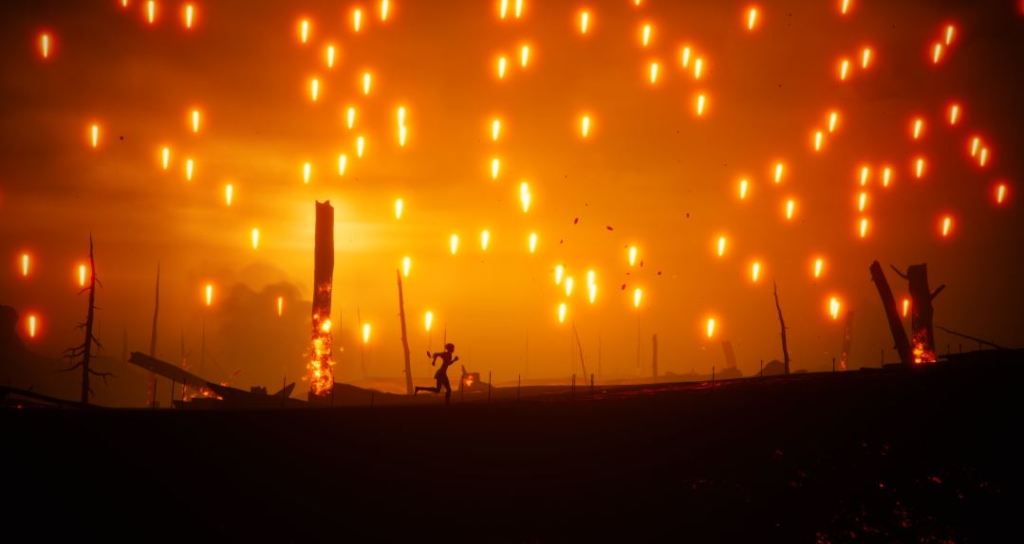
2019’s Vane, presented by Friend & Foe Games, is a short, artistically-driven adventure that takes clear influences from games such as Journey and Ico. Serving as a prologue, the player is plunged into a dramatic lightning storm, experienced through the main character of a young child as the world around him is smashed to pieces, giving clues as to the story beyond.

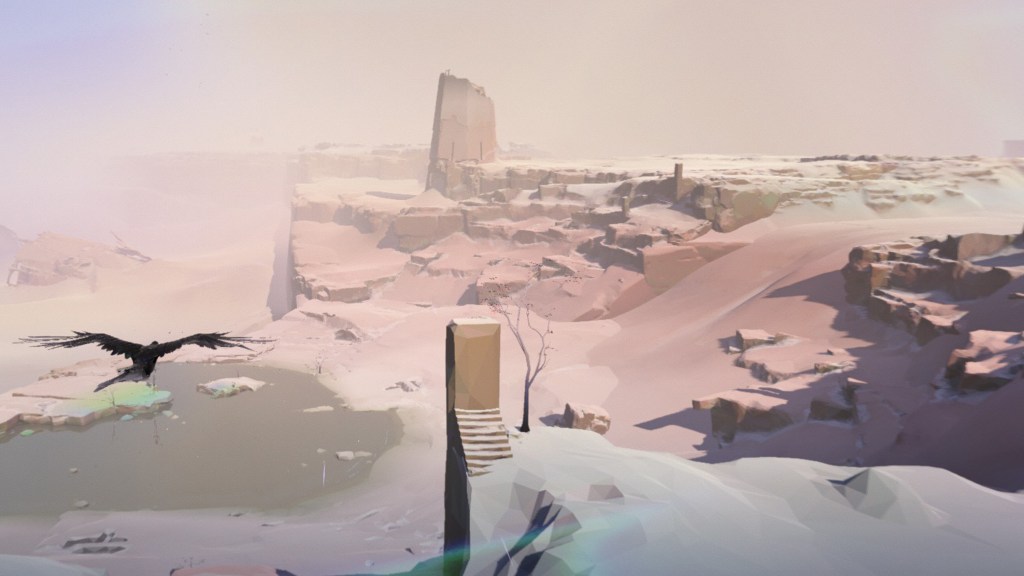
Following the chaotic introduction, the player takes the form of a bird, with the freedom to explore a large, sweeping desert vista complete with tall, red stone cliffs, valleys, and the occasional scattered oasis. It soon becomes clear that this dying landscape is all that remains of the civilization and buildings shown before. I found this section of the game to be the most visually stunning and fun to interact with. The experience of taking flight with a bird has successfully been done before (AER Memories of Old and Copoka spring to mind), however I found the visuals to be smooth and enchanting, and I spent longer than I should have soaring between rock formations and exploring the environment.

Fly, on your way, like an eagle…

Much like the titles mentioned above, Vane follows the trope of avoiding providing any text or voiceovers that explain the game’s goal any further, instead relying on silent characters and actions throughout to give hints as to the overall narrative. The puzzles are also fairly linear, relying on trial and error as you react to the environment or call out to other creatures for assistance.

The first major puzzle involves interacting with a crumbling windmill (hence the title, Vane) following which the main character is restored to the form of a human child, with the clever ability to transform between the two in order to solve future dilemmas. Following an atmospheric section underground – which stylistically reminded me of the inner workings of The Lonely Mountain in The Hobbit film franchise – you will encounter similar ‘bird children’ along with a giant, portable device with the ability to rebuild ruined structures in the vicinity.

Sadly, going into the final few acts, I began to struggle. Firstly, the game grew increasingly unclear where you were meant to go, with hard to navigate dark areas and interactive objects which were all but camouflaged. Secondly, the game suffered from bad camera angles, heightened in the last quarter. Nearing the end of the journey, despite only playing for 3 hours, I felt ready for the game to end. There was little else I needed to see once the story became clear.

Nevertheless, Vane deserves credit for attempting to continue the visual style and feel of games like Journey, in a world polluted with standard action titles. In terms of the soundtrack, the game curiously chose to embrace the Synthwave genre, which I admit to being a personal fan of. Another negative, however, is the price. £14.99 (Steam) is extortionate for a 3-hour game – I would say that the £6 mark would be fairer if you can catch it on sale…

5.9/10

Final Score

And Now My (Fire)Watch Begins

Firewatch

Every once in a while, a game comes along that feels special – a game that manages, almost by accident, to transcend the genre and stumble upon the elusive achievement of being a milestone in popular culture.

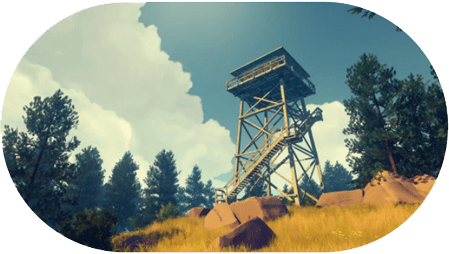
I believe that Campo Santo’s 2016 release Firewatch is one such game. No words or description can prepare you for the masterclass of musical and soundscape atmosphere, combined with an emotionally-engaging story driven by several simple yet highly intelligent mechanics designed to involve and engage the player throughout. With the weather being predictably wet and anticlimactic for summer (at least here in England), now is the ideal time to pick up this gem for an afternoon in.

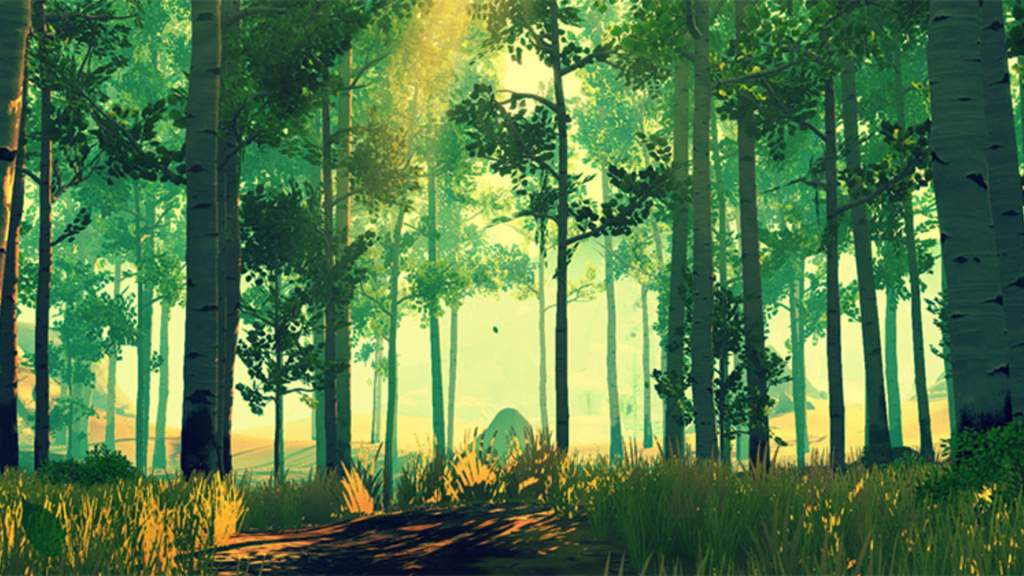
I often find myself easily distracted when playing a new game. However, I found myself hooked from the moment Firewatch began, with a haunting acoustic theme laid down by composer Chris Remo. Your journey starts with a few simple, minimalist passages of text. We establish the main character, Henry, who has willingly retreated from the world after suffering a heartbreaking loss to take on a new job as a fire lookout in the Wyoming wilderness. His simple home is a wooden tower surrounded by lonely forests, lakes and mountains.

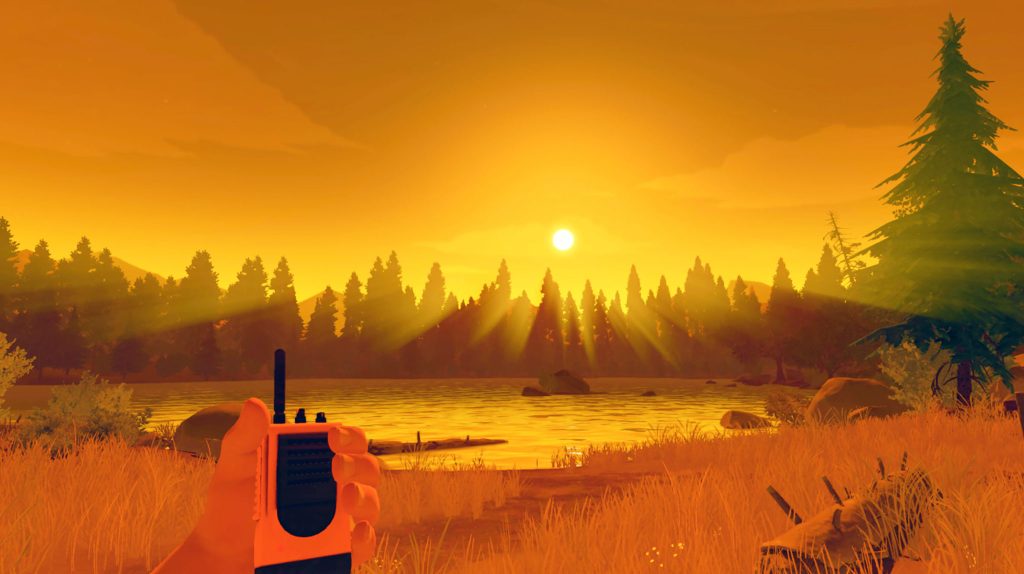
Henry’s only human contact is in the form of Delilah, a fellow fire watcher in the next tower along, who can be contacted at any time by way of a handheld radio. And here lies one of the game’s cleverest devices – you will never meet Delilah in person and cannot travel to her tower – yet throughout the game, Henry will come to rely on her as various dangers and mysteries unfold emotionally. For every new area and puzzle discovered, your unseen companion is there with you every step of the way.

It is fair to say that most games hold your hand to a certain extent, with clear indicators of where to go and how to progress. Yet in Firewatch, the sense of vulnerability, fear and paranoia are key to the story. Navigating the Shoshone National Forest requires the use of a map, compass, and guidance from your radio companion. At times it could almost be a day out with the scouts, apart from the fact that when you are alone and unsure of what danger could be lurking in the trees, all sense of a jovial ramble falls by the wayside. Firewatch is not a horror game, yet the ever-present spookiness and sense of unease throughout is one of its great achievements.

I was fortunate to play the game for the first time with my trusty group of friends mentioned in the about section of this website, and I have rarely seen them so gripped. The unique visual design of the landscape, combined with perfectly written dialogue and characterization throughout, lend this game a quality that is almost film-like in elegance. Upon finally completing it, we were unsure what to do next. No one felt bored or frustrated that they had watched a game unfold without ever having a go on the controls – it was that enjoyable to witness as an observer.

I will not delve deeper in the plot, as I do not wish to spoil the game or the sense of mystery for anyone who has not had the pleasure of playing it. Yet if I could lock every gamer in a room and force them to play one game, this would certainly be a contender. For this and the various reasons mentioned above, Firewatch will be the first game reviewed on this blog to receive the prestigious Tubular Bell award. General consensus seems to share my enthusiasm, as the game picked up a host of award wins at the BAFTA, NAVGTR, Unity, Golden Joystick, and the British Academy Games Awards, among many others…

9.7/10

Final Score

The Days Have Gone Down… Into Shadow

Stela

This month our prog spotlight falls on Stela, a side-scrolling platformer released in March 2020 by SkyBox Labs.

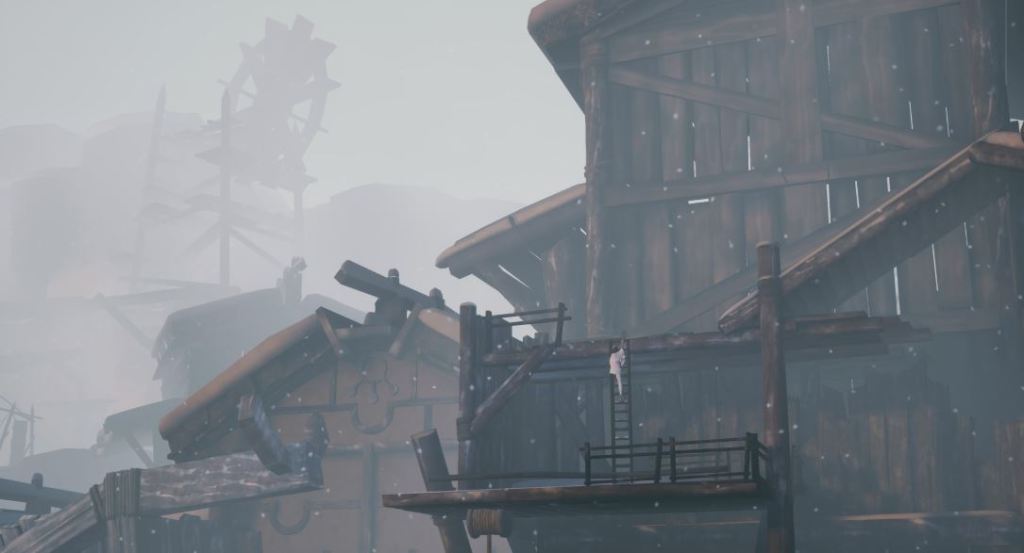
Stela is a stunningly artistic game that combines the exploration of cinematic landscapes, scenes and situations with ever-present dangers and fiendish puzzles at every turn. Way back in 2010, a highly regarded indie game called Limbo (eventually followed up by the even more richly-developed Inside) coined the term ‘trial and death’ to describe its gameplay. Stela follows in a similar vein, with most puzzles requiring a certain skill in timing, trial and error and learning from repeated failures to solve.

More cynical reviewers have accused Stela of being a straight clone of Inside and Limbo. An understandable opinion: however, I personally believe on this occasion that imitation is the sincerest form of flattery. Stela easily stands on its own merits. Besides, it could be argued that this style of game hearkens even further back to the heady days of the PlayStation One, in particular the wonderfully imaginative Abe’s Odyssey, whose titular character was forced to navigate past gunslinging enemies and puzzles with nothing but speed and ingenuity. For all its fame, Limbo also owed much to its predecessors.

Stela begins in familiar style with an ever-silent protagonist awaking in a cave, with no indication of where they are or what to do. The female character appears dainty and lithe, touched with fatigue as their delicate dress flutters in the breeze. Fortunately, we will soon discover that they are more than capable of holding their own in the hostile world beyond.

Each of the game’s areas has its own distinctive style and colour palette, while the musical score that underpins your journey is perfectly immersive throughout. Before long, it becomes clear that you are witnessing the final days of a mysterious, ancient world, as per the game’s description. In true ‘prog’ style, you must piece together the story from vague narrative and visual clues, rather than relying on any narration or text.

One of the aspects I enjoyed most was the balance between exploring dramatic, atmospheric vistas, and stumbling into sudden danger. I will not spoil the game for those wishing to play it, but be warned that you are far from alone in this crumbling landscape. None of the puzzles are overly frustrating and I was able to complete the game in just under 3.5 hours.

Personally, I enjoyed this length. The days of sinking over 30 hours into a game as a teenager are sadly diminished, as time and energy is increasingly consumed by adult life. At this point in life, I find myself enjoying the luxury of experiencing a game from start to finish in one or two sittings. However, at the full asking price of £15.49, you might expect more. Perhaps £7.00 would have been a fairer price.

Nevertheless, I would rate Stela as a deeply enjoyable experience which ticks many boxes of the quintessential ‘prog’ gaming experience. If you are looking to immerse yourself in a mysterious world of splendid visual design one of these rainy afternoons, you need look no further…

6.7/10

Final Score

Four More Games to Play If You Can’t Get Enough of Star Wars: Jedi Survivor

For anyone interested in LEGO and collectables, I currently work at iDisplayit to promote their display cases. The below blog may be of interest for anyone interested in Star Wars games!

Happy Star Wars Jedi: Survivor release day!

If you’re like us, you’ll be completing this hotly anticipated new Star Wars game faster than a Y-Wing bombing raid on an Imperial base. As discussed in our Jedi Survivor preview blog, the hit EA series ticks all the boxes for what fans want in a 3rd person Star Wars action game, with lightsabers, force powers, exploration, formidable enemies, and an engaging story in abundance.

If you can’t get enough of this brilliantly realised Star Wars game, then do not fear (that leads to the dark side). There are plenty of classic Star Wars games from a long time ago in a galaxy far, far away that you can revisit for a similar action-orientated space opera experience. There are also a few more-recent games worth checking out.

Join us as we count down our list of the best similar games to Star Wars Jedi: Survivor

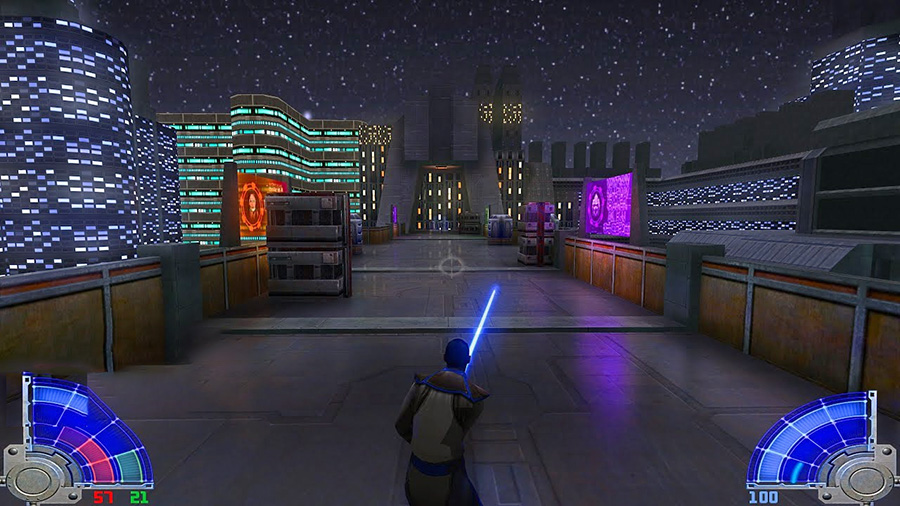
Star Wars Jedi Knight II: Jedi Outcast

2002 | Windows/Mac/PlayStation/Switch/Xbox/GameCube

This is the first game we remember playing that truly refined the experience of being a Jedi Knight. There were actually two equally renowned games before this one (Dark Forces I and Dark Forces II: Jedi Knight) though neither included lightsaber combat or force powers until 1998’s Mysteries of the Sith expansion.

If we’re honest, you can get away with skipping the earlier games, both of which have graphics and game mechanics that feel dated at this point (though they are fun to watch on a YouTube playthrough). It’s also worth mentioning that (unlike its predecessors) Jedi Outcast is readily available on most online digital platforms, such as Steam and the PlayStation store, with full compatibility for modern systems.

After doing some short background reading on the now-expanded-universe character Kyle Katarn and his role in the previous games, you’ll be ready to embark on one of the most exciting linear Star Wars adventures ever. Jedi Outcast holds up exceptionally well against modern games, with a timeless battle system, fun force attacks to unlock, and moody mission environments all accurately modelled on Star Wars planets and locations. It feels very similar to the Star Wars Jedi series, and we’d be amazed if the 2002 classic did not strongly influence the EA development team when they created the current games.

You’ll also meet some familiar faces along the way, such as Luke Skywalker, Lando Calrissian, and Mon Mothma. The game’s story takes place after Return of the Jedi, though it is no longer considered canon in the new Disney era. Despite this, it’s fun to see the direction of the saga before the sequel trilogy came along. Many fans also still hope to see Kyle Katarn introduced into the new canon at some point.

Star Wars Jedi Knight: Jedi Academy

2003 | Windows/Mac/PlayStation/Switch/Xbox

The follow-up to Jedi Knight took everything that made the first game great and expanded it, using the same engine. Fun new features included the ability to customise the playable character’s race and gender and choose between a single, dual or double-bladed lightsaber combat style.

This game is even easier to pick up for series newcomers as it concerns a fresh protagonist and does not require much knowledge of previous instalments. Assuming the role of Jaden, players head to Luke Skywalker’s Jedi Academy to study the ways of the force. It is not long before the hero is thrown into dangerous missions all over the galaxy, culminating in a truly epic fight against a legion of lightsaber-wielding Sith cultists.

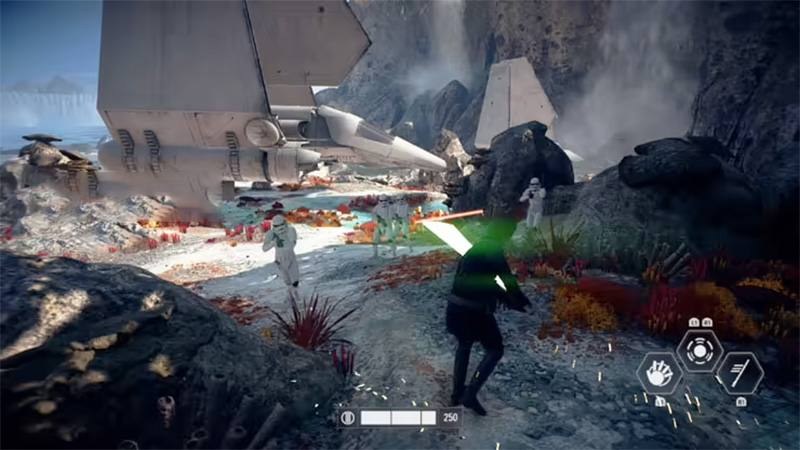
Star Wars Battlefront II

2017 | PlayStation/Windows/Xbox One

The original Battlefront II was a stone-cold classic, but we’re discussing the next-gen remake in this case.

Most people buy a Star Wars Battlefront game to spend hours fighting random battles against nerds worldwide. But the 2017 sequel also includes a solid, story-driven single-player campaign. For most of the missions, players assume the role of a gun-wielding imperial who also gets to pilot a range of starfighters, though, on occasion, they also play as classic characters such as Luke Skywalker, Leia Organa, Han Solo, and Kylo Ren.

The short portions of the game with Luke are worth the admission on their own, rivalling anything in the Star Wars Jedi games.

Star Wars: The Force Unleashed

2008 | Nintendo DS/PlayStation/Wii/Xbox 360/Windows/Switch

If you don’t mind wielding your laser sword for the Dark Side, this is the game you’ve been looking for. Until next-gen titles such as Star Wars Battlefront came along, this remained the peak of lightsaber combat gaming for some time.

In this fan-favourite, players assume the role of Starkiller, a powerful force user trained in secret by Darth Vader to rival the Emperor. Your mission is to hunt down survivors of the Order 66 Jedi purge while remaining hidden from Palpatine. Throughout Starkiller’s journey, players will unlock devastating force powers and learn to create powerful lightsaber combo attacks while exploring a multitude of stunning worlds from the Star Wars galaxy.

WHAT OTHER STAR WARS GAMES ARE COMING OUT THIS YEAR?

Fans of retro Star Wars games will be excited for the Knights of the Old Republic remake scheduled for release on PC and PS5. The MMO from the same series is still a work in progress, but the story-focused approach of KOTOR should provide a treat.

We’re also excited to see that developer Quantic Dream (responsible for titles such as Heavy Rain and Detroit: Become Human) is also producing Star Wars Eclipse. Assuming they stick to their usual narrative gameplay approach, this should provide a unique gaming experience which stands out from other Star Wars titles.

Which Star Wars games are you looking forward to this year? And do you have any other suggestions from the vault that we missed? Let us know in the comments.

Can I Get A Witness?

The Witness

The Witness is the brainchild of designer Jonathan Blow, who’s previous 2008 game ‘Braid’ is frequently touted as one of the greatest indie titles of all time.

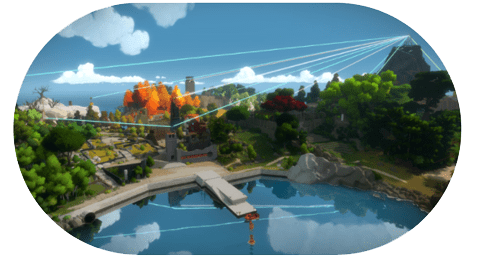
As the game starts, the player is placed without any clear instructions on an island, devoid of life and filled with mysterious buildings and objects, set beside natural beauty. In the distance looms a small mountain, shaped like an almost perfect cone. Sound familiar? To anyone who has played Myst, the godfather of the genre, it should come as no surprise that this was a heavy influence on the game.

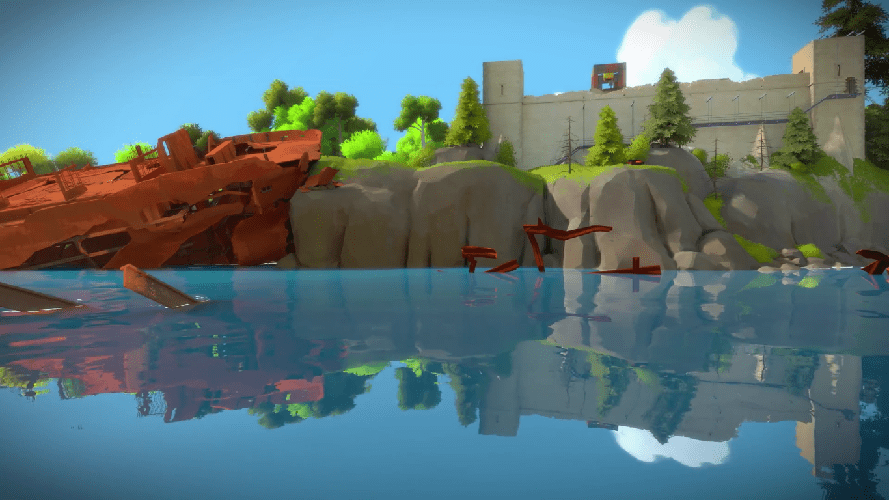
My journey begins with a slow and thorough exploration of the island, taking in the atmosphere and taking note of potential puzzle elements and clues. The scenery itself eschews complex graphical textures, instead painting a picture of bright colour and geometry. Much like Myst, there is a pleasantly lonely atmosphere to the place. The soundscape mixes nature with your own footsteps, punctuated by a distant waterfall.

It is not long before I am forced to open a door by way of a simple maze puzzle involving drawing lines. Following this, I face the same puzzle several times over, each time with slightly increasing difficulty. There is a theme growing here. Before I can grow too comfortable, I eventually stumble into a new area where the solution changes to referencing an environmental clue – I must trace the correct branch of a tree leading to an apple.

Up to this point I have remained patient. An hour into the game, I would have expected the puzzles to change style by this point. But I am prepared to give the game the benefit of the doubt, as I am sure it will vary things up soon. It is not much longer before I discover my first real clue to the story – a sound recording hidden beside the shore. At least, I assumed it to be part of the story before I later realized that all such audio messages are merely philosophical quotes taken from the real world with no clear context.

Another hour passes and I find myself still solving the same puzzles as I work my way through the large island. There are more than twelve areas, each with its own unique theme and visuals. The ‘maze’ style changes slightly in each area, for example involving symmetry, isolating certain dots, or taking a route that passes through certain items, but essentially it is all the same.

Herein lies the game’s greatest flaw. When I picked up the title, I was very excited, having read 9 and 10-star reviews citing it as a masterpiece. As a huge fan of Myst, the supposed similarities piqued my interest even further. The Witness may be inspired by Myst, however it is not comparable is my opinion. Myst took place on an island considerably smaller than the one in The Witness, and yet still managed to contain a complex array of puzzles, story elements and mechanics, all packed within its softly lapping shores.

Despite the initial promise, The Witness sadly never moves into second gear beyond its repetitive puzzles and complete lack of story throughout. For me, this breaks the cardinal rule of these types of puzzle games. The puzzles themselves must offer a reward, in the form of progressing the story. Otherwise, you are essentially playing Tetris on an island.

I would praise The Witness on its visuals, design, and sound. Ultimately, however, the high reviews from other sources leave me wondering if I have played the same game. If you have a particular interest in solving ‘maze’ style puzzles, then this is the one for you. However, if you are looking for a rich storyline and puzzles that link smoothly into the environment, far more intriguing worlds await…

3.9/10

Final Score

If You Go Down To The Woods Today…

The Forest

I did not intend to write about Endnight Games’ The Forest on this blog. I actually picked up this gem of a game fully aware I would be taking a break from the usual non-violent journey I am accustomed to in a ‘progressive’ game, trading this in for something more visceral and terrifying, with a focus on survival.

Nevertheless, having now sunk in over fifteen thrilling hours into The Forest, I feel that I have to mention it.

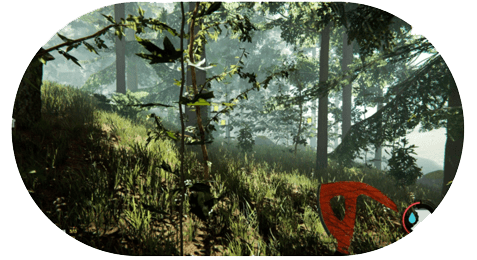
The game takes place on a remote, heavily forested peninsula where the main character is the survivor of a plane crash. You are thrown into danger from the start, with hunger and thirst a constant thorn in your side, and no guidance on where to go or what to do next. Night is fast approaching, with shelter a priority.

Dawn is ever the hope of men

In a mad dash – reminiscent of a competitor in the Hunger Games first arriving at the Cornucopia – I scramble about the immediate area, breaking open luggage and collecting everything I can find, from clothes to cans of soda.

The game boasts stunning visuals throughout. I was immediately struck by the atmosphere of the place, as the wind shook through the trees and animals scuttered around in the undergrowth. It was a haunting, yet beautiful scene. As I would go on to discover, this is where the game’s greatest achievement lies: in its ability to cleverly combine vistas with a feeling of loneliness, beauty and fear, all at the same time. The game truly oozes atmosphere at every turn.

To my relief, I soon found myself approaching what seemed like a village of wooden huts. But soon my relief turned to fear. I nearly leapt out of my chair as a horrific, animalistic howling broke the silence, screeching through my headphones. In the distance, I could make out a naked humanoid running through the trees, reminiscent of one the vampirical creatures from the science fiction classic, I Am Legend.

I did not wait another moment but turned and fled in the opposite direction until I reached the coast about five minutes later. It was growing dark by this point, and with trembling fingers I gathered enough sticks and leaves to build a temporary shelter. To my relief, I awoke the next morning unscathed.

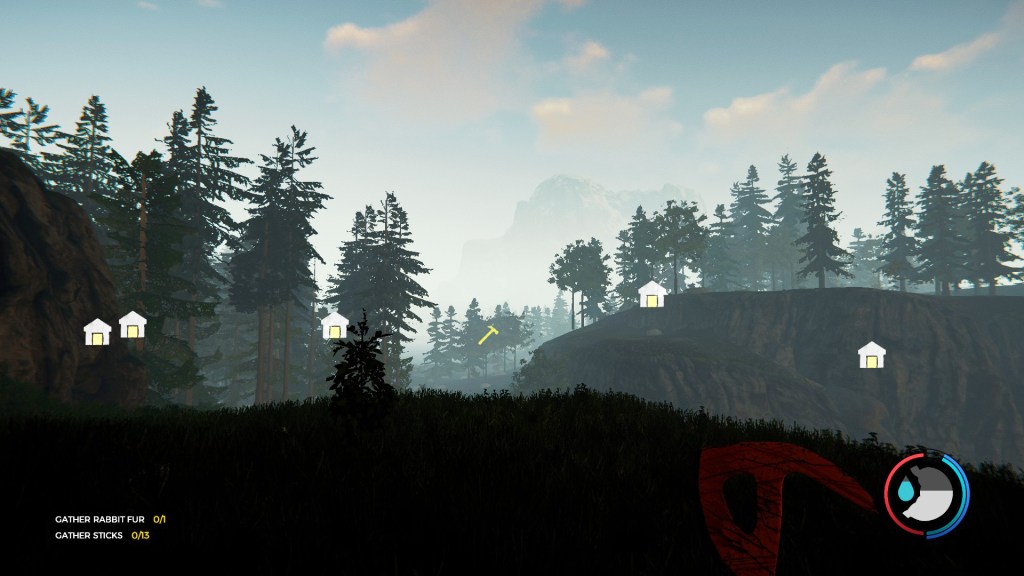
A peaceful morning on the cliffs

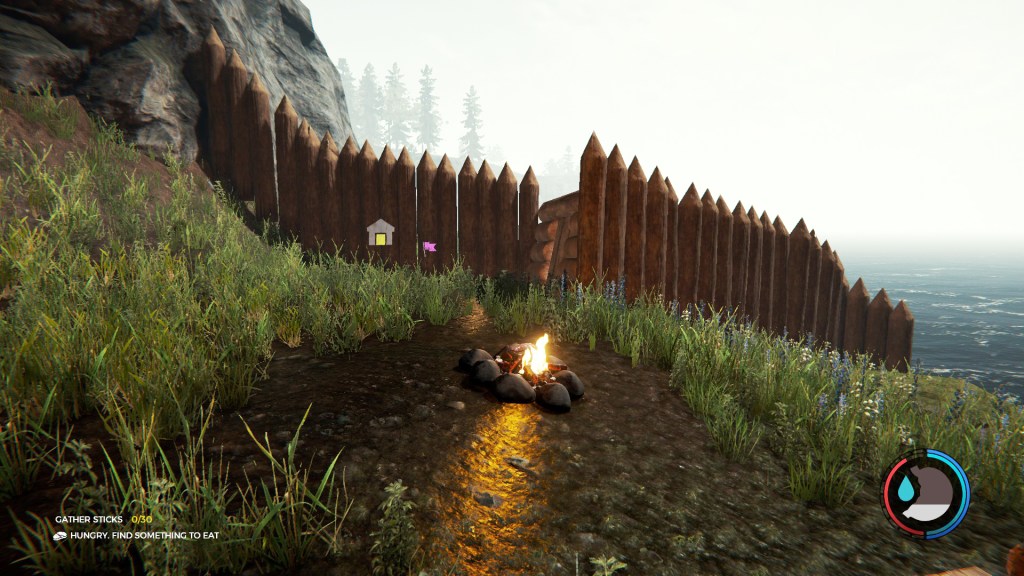
I felt strangely comforted by the proximity of the cliffs and decided to follow them for a time. Eventually, I found myself beside a secluded outcrop with a narrow way in and out, where I decided to build my main camp.

As time went on, I grew more accustomed to the game’s sophisticated building and crafting system. Before I knew it, I had sunk about six hours into gathering logs on a wooden sled, until at last I had built a wooden cabin, a protective wall, several rain collectors, and the addition of a drying rack for meat and animal skins.

I had managed to avoid stumbling across any more of the strange mutants, finding solace in my familiar routine of hunting and settling beside the fire to watch the sun set. During this time, I felt a constant emotion that few games have managed to replicate since I first played Myst at the age of seven years old. It was an ever-present unease and tension that the atmosphere would be broken at any moment, by a monster darting from the trees.

It may sound laughable, but I used to believe the same thing would happen in Myst. Try to remember, this was one of the first games I ever played at a young age, in the innocent times of the early 90s, when we had yet to understand the rules and limitations of video games. Never mind that Myst was essentially a slideshow of still images, in the imagination of my young self, anything could happen. Coupled with the deep mystery and lack of instructions, such games can easily morph into a subtle, fearful experience.

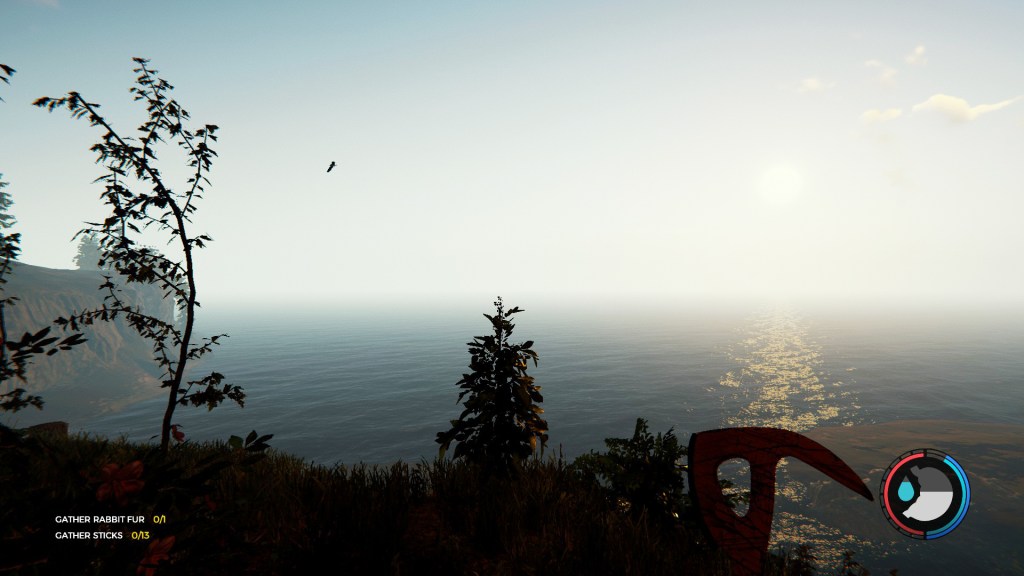
A place by the sea

To progress the game, you are eventually forced to explore the rest of the island, where slowly the vague storyline comes together. If I had to pick a fault, I would have liked to see more story development, perhaps in the form of journals or tape recordings. However, the other elements of the game more than make up for this.

As I finish this post, my character has just discovered a rope leading down a hole in the earth. As my climb into darkness continues, I can see that the developers were clearly inspired by the chilling cult horror film The Descent. In this film, a group of explorers make their way through a vast, forgotten cave network underground, which soon turns into a nightmare as they stumble across the creatures that lurk beneath.

I will not spoil the game further, except to say that if you crave a truly absorbing game experience this weekend, then you could do worse than picking up a copy on Steam. It is also worth mentioning that The Forest also includes a ‘Peaceful’ mode for Prog.Gaming purists who would like to eschew the more violent aspects of the story…

7.2/10

Final score

Transforming Mars

CAT Interstellar

We are now living through the early days of Artificial Intelligence. The rise of the machines is no longer a dream of science fiction, but a reality with each day that passes. This inevitability brings with it many fears, as well as bringing into sharp focus one of the subjects oldest questions – what does it mean to be human?

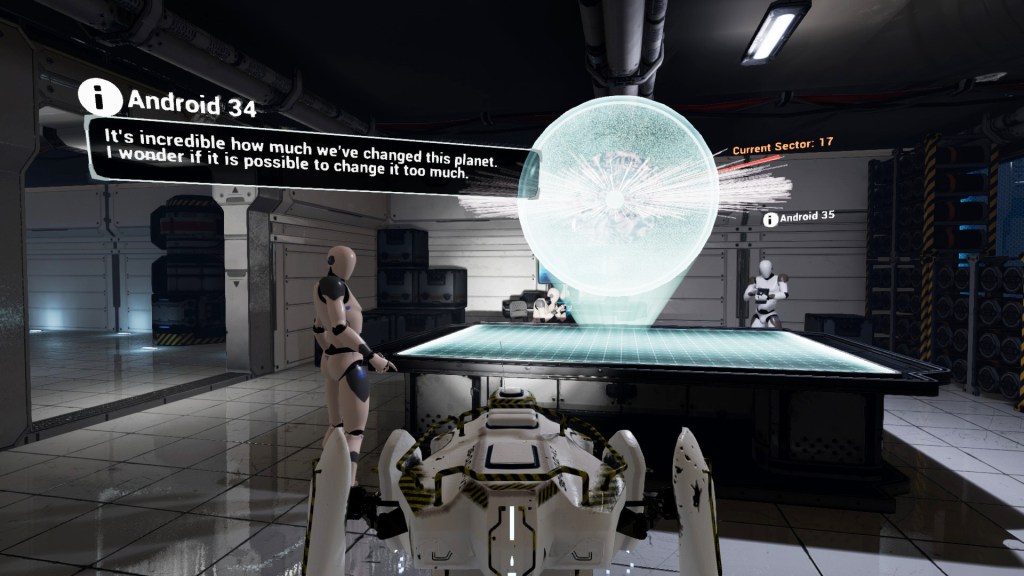
CAT Interstellar transports you straight into the shell of a robotic “dog” in a near-future setting. Your purpose is to assist the other, more human-like Androids on the surface of Mars, as they attempt to terraform the planet for human habitation. The game cleverly keeps the real humans restrained on planet Earth, many millions of miles away, allowing the focus to remain solely on the AI inhabitants of the mission. As the story progresses, you soon start to look on the blank-faced robots the same way as you would living companions, with their own day-to-day problems, hopes and concerns.

The game is richly filled out with AI characters, all struggling to complete their tasks on a hostile, barren world. I particularly enjoyed hearing one Android muttering about having to work on the air ducts, while soon after witnessing another attempting to fix some broken machinery by giving it a firm kick. Throughout the game, the robots continually display a nosy curiosity coupled with their own opinions, much like humans would. The addition of recorded dialogue adds to the overall humanity of these characters.

The game eases you in with some fun tasks to accomplish on the Martian surface, such as collecting some boxes blown away in a sandstorm, or assisting with fertilizing plants within a fully functioning greenhouse. Soon, you will descend below the surface of the planet into the mines, in order to fulfill your main purpose: locating several drones that went missing in the lower caverns and retrieving their data banks.

I would recommend taking your time to properly explore the Martian surface before taking the lift down into the mines. The game’s visuals are stunning throughout. And no more so than on the surface, as you travail a bleak landscape of rock and sand, battered by the sun.

The Solar Fields

It is within the mines where the more adventurous aspects of the story begin. Following an accident, you “awake” deep inside a natural formation of caves, alongside your companion, Android 42. Working together, you must find a way back to the surface. Throughout this section of the game, I was hooked by the thrill of exploring the unknown. It felt like Jules Verne’s Journey to the Centre of the Earth had been updated from the early 19th century to a futuristic sci-fi setting.

As I do not want to spoil anything for those who choose to play the game, I will only say that the Android’s mission up until this point now fades into unimportance. Soon, our two AI friends will stumble across something that could shed light on one of the greatest mysteries of the universe.

CAT Interstellar in a true Indie game, created by a one-man development team at Ionized Games. You can sense the amount of work and passion that has gone into creating the game, along with a true respect for the science fiction genre. At times, the game felt like stepping into an interactive short story from the likes of Robert A. Heinlein or Arthur C. Clarke, which can only be a compliment.

As a sole labour of love, it is natural that the game can seem a bit rough around the edges, however, in true Indie fashion, this often adds to the charm. The game is currently free to play on Steam and only $4.99 on the US Playstation Store. Clocking in at around one and a half hours to complete, it is a perfect for a an evening where you want to experience a story without dedicating yourself to a lengthy gaming session. Nevertheless, I found the story to be so engaging that a part of me wished it had continued beyond the rather abrupt ending…

6.8/10

Final Score

From The Beginning

For many, switching on a video game is no more than a source of quick entertainment. However, the evolution of games from the early days of 8-bit graphics and sound to the current world of rich, 3D environments, complete with orchestral scores, has paved the way for a respected form of art.

What is Prog Gaming?

The umbrella term Progressive (or Prog) Gaming loosely covers tags such as exploration, atmospheric, adventure, story-rich, artistic, puzzles, walking simulator and indie, usually favoring non-violent games (although this is not always a prerequisite) where the focus is on something deeper; a yearning for the unknown and experiencing a journey beyond the day-to-day mundane.

This blog is a chance to discover games which fit this mold, with a focus on exploring stunning environments, challenging ourselves through puzzles and ambiguous meanings, and experiencing rich storylines that transport us to new worlds.

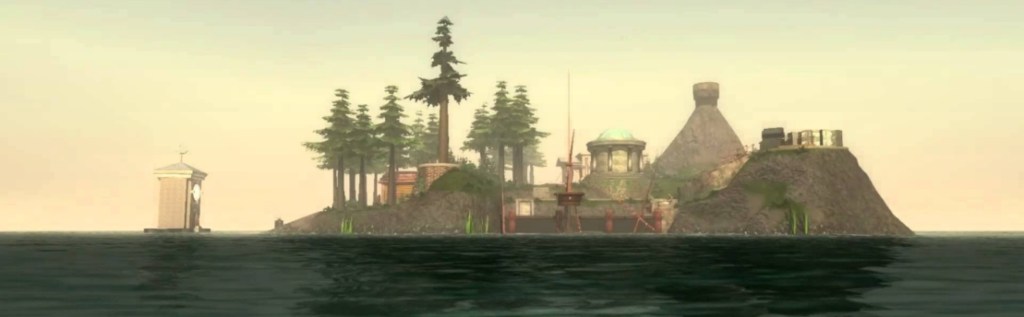
Originally released for the Macintosh platform in 1993, Myst was a surprise hit that helped to drive adoption of the new CD-ROM format.

I will cover games from all eras, taking us from the rise of the consoles, where artistic freedom was often restricted by commercial needs, to the present day, where the advent of online platforms such as Steam has allowed smaller developers the freedom to release their games directly to a world-wide audience.

The term Progressive Gaming was first coined by me and my good friend Chris Myhill, who share a love of all things Prog Rock, and saw many of the similar themes and ideals of this musical genre reflected in certain games. What started out as a tongue-in-cheek method of describing them soon entered our own lexicon.

How can I join in?

Your own thoughts and opinions are priceless. As a valued reader, you are encouraged to join in the discussion by subscribing and commenting on each blog post. Don’t forget to let me know about any games you would like me to feature in future. I am always on the lookout for the next recommendation!

I will aim to provide a rating for each game, with a score out of 10. On occasion, certain games will receive the addition of the prestigious Tubular Bell award – granted solely to games I consider to have transcended the genre. Much like Mike Oldfield’s composition of the same name helped to define Prog Rock, we will discover certain games which have left a timeless mark on the world of gaming.

“Welcome back, my friends, to the show that never ends

We’re so glad you could attend

Come inside, the show’s about to start

Guaranteed to blow your head apart

Rest assured you’ll get your money’s worth

The greatest show in Heaven, Hell, or Earth!

Emerson, Lake and Palmer, from Karn Evil 9